
Most schools are shaped long before an architect ever picks up a pencil.
In 25 years of designing educational campuses, I've noticed a pattern: the decisions that matter most like the site, the budget, the vision for what kind of school this will be are usually made before anyone in the room has design expertise at the table. By the time an architect is brought in, some of the best opportunities have already closed, and certain compromises are locked in for good.
The good news is that every one of these mistakes is avoidable. Here are the ten I see most often, and what to do instead.
1. Choosing land before understanding its potential
The mistake: Buying a plot based on price and location alone, without checking whether it can actually support your vision.
A site's shape, orientation, road access, topography, and local regulations determine almost everything you can eventually build. We've worked with promoters who only discovered after buying the land that they couldn't fit the classroom count they needed, couldn't create adequate sports facilities, or had no room to expand, by which point changing the site was no longer on the table.
On one project, the site turned out to be sunk nearly three feet below the surrounding road level - something a quick site visit doesn't reveal, but a proper survey does. That single detail meant significant additional fill and grading before any construction could begin; cost and time that a thorough site study would have flagged well before the land was purchased.
A feasibility study before you buy is a small cost that prevents a much bigger one later.
2. Starting with a building instead of an educational vision
The mistake: Jumping straight to "how many classrooms, how many floors, what should the façade look like?"
Those questions come second. The first conversation should be about the kind of school you're building: neighbourhood school or a destination campus? Academics-first, or built around sports, arts, or experiential learning? CBSE, ICSE, IB? How many students in ten years?
When the educational vision is clear, the campus grows around it naturally. Without that clarity, a project tends to become a collection of buildings rather than a coherent learning environment.
3. Designing for how schools used to work, not how they will work
The mistake: Building for yesterday's lecture-driven classroom, when the entire education system is moving toward experiential, collaborative, and holistic learning.
Indian education is at an inflection point. The predictable, rote-memorization model is giving way to an ecosystem built around group projects, hands-on experimentation, and interdisciplinary work, and this isn't a minor shift in teaching style, it's a systemic one. National education policy is reinforcing this shift, actively nudging schools away from exam-centric models and toward skills-based, holistic learning. Parents have absorbed this too: infrastructure that once felt optional like well-equipped sports facilities, dedicated cultural and performing-arts spaces, even swimming pools is increasingly seen as a baseline expectation, not a luxury. "Why don't you have a pool?" is now a real question schools get asked.
This creates a very practical problem for campuses designed 20–30 years ago under a different set of assumptions: long uniform corridors, auditoriums built only for one-way lectures, and little to no flexible or activity-based space. When these schools try to modernise, the mismatch shows up as real, expensive constraints of plumbing and structural issues when adding specialised facilities, limited real estate for outdoor sports, classrooms too small or too rigid for group work.
A classroom built today needs to still make sense in twenty years, not because we can predict exactly how children will learn then, but because we already know the direction of change. Designing for flexibility now is far cheaper than retrofitting for it later.
4. Setting the budget before getting professional input
The mistake: Fixing the number before understanding what actually drives cost.
Structural systems, finishes, building services, and technology requirements all shape the final figure, and without that context, budgets are often set unrealistically, or pointed at the wrong priorities. That usually shows up later as compromises during construction, or expensive redesigns.
Underestimation is common, and it's rarely deliberate. Many promoters simply don't have a formal costing process to work from and lean on rough assumptions instead of detailed forecasting. It's often compounded by wrong advice: free or informal guidance from someone outside the project, given with confidence but without real accountability for the number.
There's also a more human problem underneath this that people are genuinely scared of the real number. When an architect presents an honest, complete estimate, it's often met with resistance, as if the higher figure is a problem to negotiate down rather than the actual cost of doing the project properly. The fix isn't a bigger budget, it's a more honest one, arrived early. A proper Detailed Project Report (DPR), broken down phase by phase, with a clear contingency built in for inflation and the surprises every construction project eventually runs into, is what turns an estimate into something you can actually plan and build around.
5. Ignoring future expansion
The mistake: Designing for the school's opening day, not its tenth year.
Student numbers grow, new programmes get introduced, and facilities that felt sufficient at launch start to strain. When a campus hasn't been planned for growth, new blocks get added wherever space allows and playgrounds shrink, circulation gets messy, and the campus loses whatever character it started with.
This is where phasing becomes one of the most important and most overlooked parts of the plan. A school opening in stages, with construction dragging on for years afterward, can start to feel perpetually unfinished, and for parents, the physical campus is often the clearest signal of a school's quality. The stronger approach is to prioritise finishing the exterior and site infrastructure first, landscaping, façades, sports fields, pavements, even if some interior fit-outs are staged for later. That gives every incoming batch of parents a campus that looks and feels complete, while interiors are completed in lower-impact phases behind the scenes. None of this works as an afterthought. It must be built into the architectural plan from day one, with modular blocks designed to function independently at each stage.
Planning for expansion and sequencing it well is far easier, and far cheaper than solving it after the fact.
6. Assuming any architect can design a school
The mistake: Choosing a firm based on portfolio photos or awards, without checking for education-specific experience.
A school is not simply a set of classrooms; it's an environment where children learn, move, play, and develop over years. Designing that well means understanding student circulation, how teachers actually use different kinds of learning spaces, supervision and safety, and how daylight, acoustics, and ventilation shape a child's day-to-day experience.
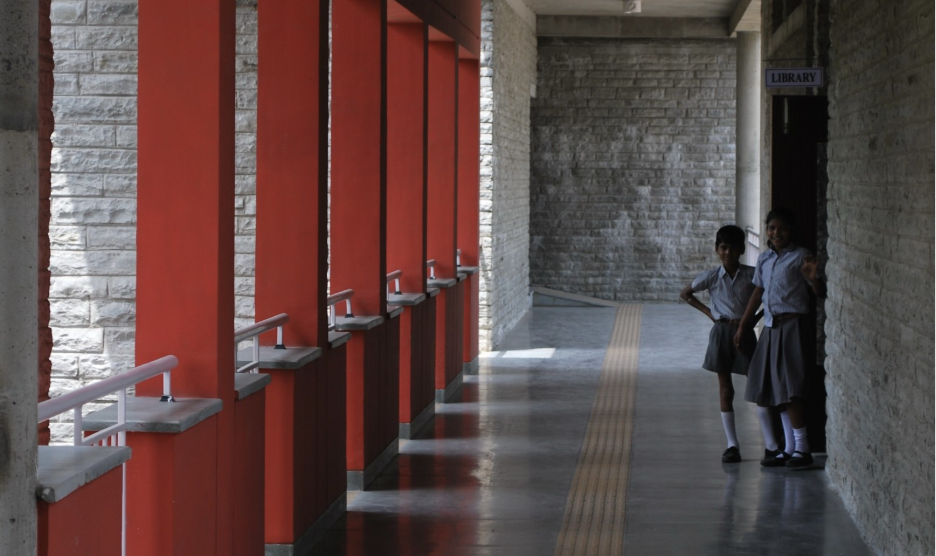
Look for a firm that has done this before; the right architect shapes far more than a building; they shape the institution's future.
7. Judging the project on construction cost alone
The mistake: Optimizing for the cheapest build, rather than the best-performing one over the decades ahead.
"The objective should not be to build the cheapest school. It should be to build one that's future-ready, not just for the students in front of us today, but for the larger vision. Holistic learning is happening now, and infrastructure has to evolve with it. We have to design for at least the next twenty years, and that means building for change, not against it." — Vinod Singhi
Orientation, natural ventilation, daylight, landscaping, and material choices all affect maintenance costs, energy use, and comfort for decades after handover. A school that's cheap to build but expensive to run or one that can't adapt as learning evolves almost always costs more in the long run than one designed with the next twenty years in mind.
8. Leaving statutory requirements for later
The mistake: Assuming compliance can be sorted out after the design is finalized.
Building byelaws, fire safety norms, accessibility standards, environmental clearances, and education-board requirements all need to be built into the plan from day one. Bolting them on afterward is where projects lose months to revisions, delayed approvals, and unplanned costs.
Good planning isn't just about good design. It's about a project that's compliant and buildable from the start.
9. Bringing the architect in too late
The mistake: Involving an architect only after the land is bought, the budget is fixed, and a rough brief exists.
By that stage, the decisions with the biggest impact on the project have already been made. An architect's real value starts much earlier in site evaluation, feasibility studies, master planning, and cost estimation, where the biggest savings in a project are usually found. The earlier they're in the room, the more room there is to get things right.
10. Picking an architect on fees alone
The mistake: Treating the lowest quote as the best deal.
An architect's fee is a small fraction of total project cost, but their decisions influence nearly every rupee spent on construction. Good planning reduces wastage, improves space efficiency, and lowers operating costs for decades; those savings routinely outweigh any difference in professional fees.
The better question isn't "who charges the least," it's "who creates the most value for this investment."
Final Thoughts
A school's success is decided long before construction begins in, the site you choose, the vision you set, and the professionals you bring in early. Getting those early decisions right is the single biggest lever you have over how the campus performs for the next twenty years.
Every school has its own vision, challenges, and aspirations. There is no single formula that works for every project. However, careful planning and the right guidance at the beginning can make all the difference.
If you are planning a new school or expanding an existing one, invest time in getting the early decisions right. They will shape the success of your campus for many years to come.